Back pain can turn simple things—sitting at your desk, getting out of bed, walking, or even sleeping—into a daily struggle.
If you are searching for the best doctor for back pain in Lahore, the first question should not simply be “Who is the best?”
A better question is:
“What is causing my back pain, and what type of treatment do I actually need?”
Back pain can come from muscles, joints, discs, nerves, posture, injuries, or a combination of several factors. That is why the right treatment starts with a proper assessment rather than simply treating the painful area.
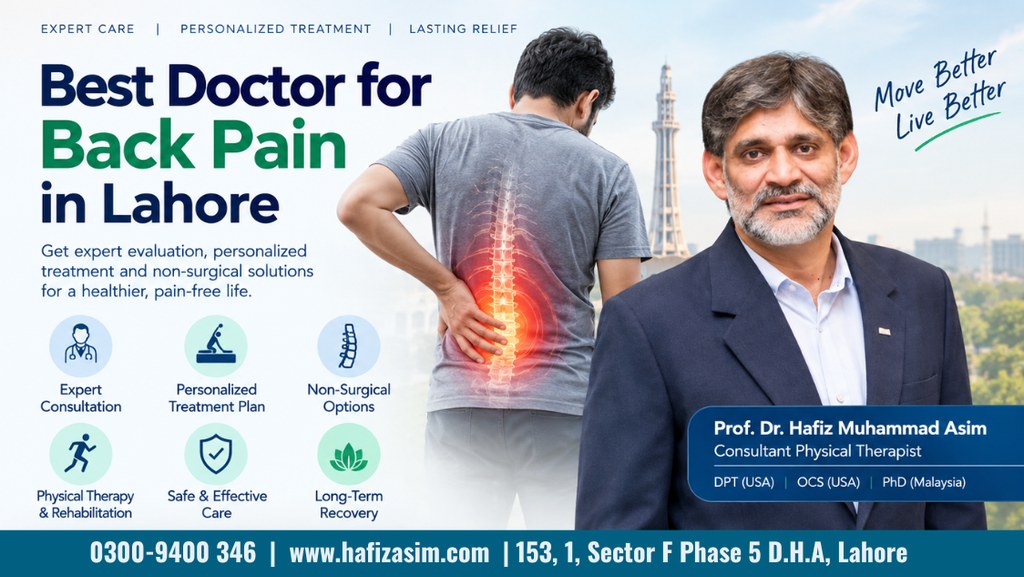
Quick Answer: Who Should You See for Back Pain?
For many musculoskeletal and orthopedic back problems, an experienced physical therapist can assess your condition and provide non-surgical treatment and rehabilitation.
Prof. Dr. Hafiz Muhammad Asim is a Consultant Physical Therapist with more than 27 years of experience in musculoskeletal, orthopedic, neurological, and rehabilitation care.
But there is an important point:
Not every type of back pain should be treated in the same way.
Your symptoms, medical history, physical examination, and—when necessary—diagnostic tests help determine the most appropriate treatment.
Why Does My Back Hurt?
Back pain is not one single condition.
Two people can both say, “My lower back hurts,” while having completely different problems.
For example, back pain may be related to:
- Muscle or ligament strain
- Poor movement or prolonged sitting
- Disc bulge or herniated disc
- Sciatica or nerve irritation
- Spinal joint problems
- Previous injury
- Weakness or reduced physical activity
- Age-related changes in the spine
- Certain medical conditions
This is why simply taking painkillers or copying an exercise from the internet may not always solve the problem.
The location of pain is not always the source of pain
This is something many people don’t realize.
Pain felt in the lower back may sometimes be associated with structures around the spine, while pain traveling into the buttock or leg may involve nerve irritation.
The pattern of your symptoms matters.
What Is the Difference Between Back Pain and Sciatica?
People often use “back pain” and “sciatica” interchangeably, but they are not exactly the same.
Back Pain
Back pain may remain around the lower back and can be associated with muscles, joints, discs, movement, or other structures.
Sciatica
Sciatica generally refers to symptoms related to irritation or compression of the sciatic nerve or its nerve roots.
You may experience:
- Pain traveling into the buttock or leg
- Tingling
- Numbness
- Burning or electric-like sensations
- Weakness in the leg or foot
If you have these symptoms, don’t assume that stretching harder is the answer.
A proper assessment is more useful than guessing the cause.
What About a Slipped Disc or Disc Bulge?
Hearing “disc bulge” or “slipped disc” on an MRI can be frightening.
But an important fact is often overlooked:
A disc abnormality on an MRI does not automatically mean you need surgery.
Some people have disc bulges without significant symptoms. Others may have pain or nerve-related symptoms that require treatment.
The MRI needs to be considered alongside your symptoms and physical examination.
Does a Disc Bulge Always Cause Pain?
No.
Some people have disc changes visible on imaging without experiencing back pain.
That is why treatment should not be based on an MRI report alone.
Your symptoms + clinical examination + medical history provide important context for understanding an MRI.
Do You Always Need an MRI for Back Pain?
Not necessarily.
Many common cases of back pain can initially be assessed through a clinical history and physical examination.
An MRI may be appropriate in certain situations, particularly when there are concerning symptoms, significant neurological findings, trauma, or when imaging would change the treatment plan.
Don’t panic after reading an MRI report
If your report says:
“Disc bulge”
or
“Degenerative changes”
it does not automatically mean your spine is permanently damaged.
Discuss the findings with an appropriately qualified healthcare professional who can explain what they mean in relation to your symptoms.
Can Back Pain Get Better Without Surgery?
In many cases, yes.
Depending on the cause and severity of the problem, conservative treatment may include:
- Physical therapy
- Therapeutic exercise
- Strengthening
- Mobility exercises
- Manual therapy when appropriate
- Education about movement and activity
- Gradual return to normal activities
The goal is not simply to make the pain disappear for one day.
The goal is to help you move better, become stronger, return to normal activities, and manage your condition safely.
When Is Surgery Considered?
Surgery is not automatically required just because someone has a disc bulge, back pain, or sciatica.
However, some conditions do require specialist medical or surgical evaluation.
The decision depends on the diagnosis, severity, neurological findings, response to conservative treatment, and other clinical factors.
What Happens During a Back Pain Assessment?
A good assessment should involve more than asking, “Where does it hurt?”
A physical therapist may look at several things.
1. Your Symptoms
- When did the pain begin?
- What makes it better or worse?
- Does it stay in your back, or travel into your leg?
2. Your Movement
Certain movements can provide useful information about how your symptoms behave.
3. Strength and Mobility
Muscle strength, flexibility, joint movement, and coordination may all be assessed.
4. Nerve-Related Symptoms
Numbness, tingling, altered sensation, or weakness may require additional neurological assessment.
5. Your Daily Routine
Your work, sitting habits, physical activity, sleep, and other daily activities can all be relevant.
The purpose of an assessment is to understand the person—not just the painful body part.
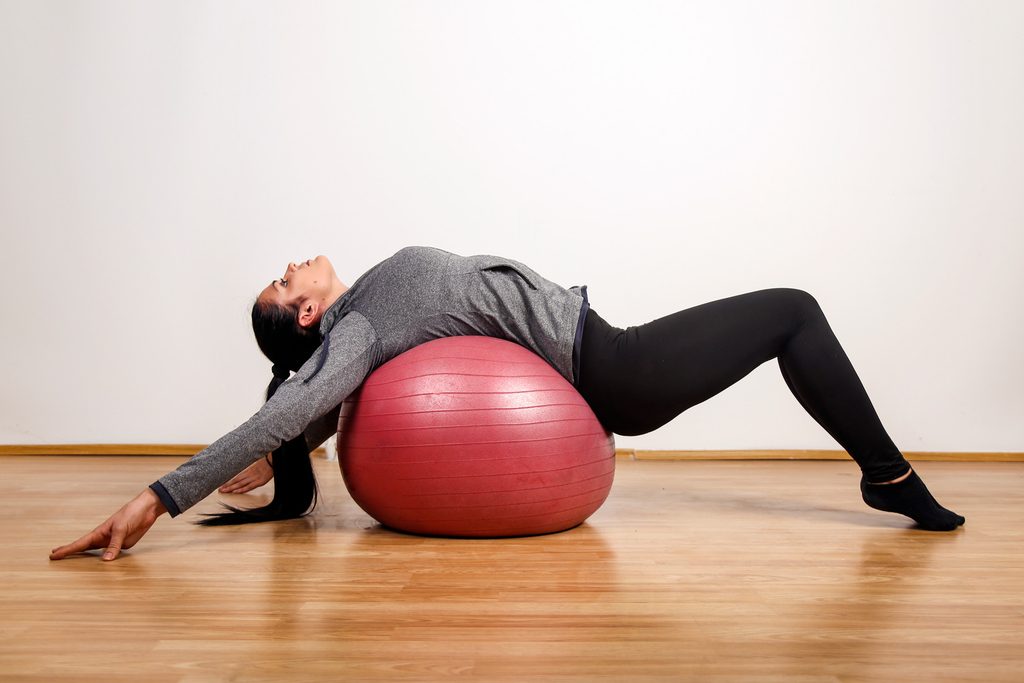
What Can You Do at Home for Back Pain?
If your back pain is mild and there are no concerning symptoms, staying reasonably active is often preferable to prolonged bed rest.
You can consider:
Keep Moving
Gentle movement and normal daily activity, within your tolerance, may be helpful.
Avoid Sudden Overexertion
Don’t go from very little activity to heavy lifting or intense exercise overnight.
Take Breaks From Sitting
If you work at a computer for long periods, change position regularly and take short movement breaks.
Don’t Copy Exercises Blindly
An exercise that helps one person may aggravate another person’s symptoms.
If an exercise consistently makes your symptoms worse, stop and seek professional advice.
When Should You See a Back Pain Specialist?
Consider getting your back pain professionally assessed if:
- It keeps coming back
- It is affecting your sleep
- You cannot perform normal daily activities
- Pain is traveling into your leg
- You have persistent numbness or tingling
- You notice weakness
- Your symptoms are getting worse
- Your pain started after an injury
- You are worried about your symptoms
Red Flags: When Should Back Pain Be Taken Seriously?
Some symptoms require urgent medical assessment.
Seek prompt medical attention if back pain occurs with symptoms such as:
- New loss of bladder or bowel control
- Numbness around the groin or saddle area
- Significant or rapidly progressing weakness
- Severe pain following major trauma
- Other serious or rapidly worsening symptoms
Do not try to manage these symptoms yourself with online exercises.
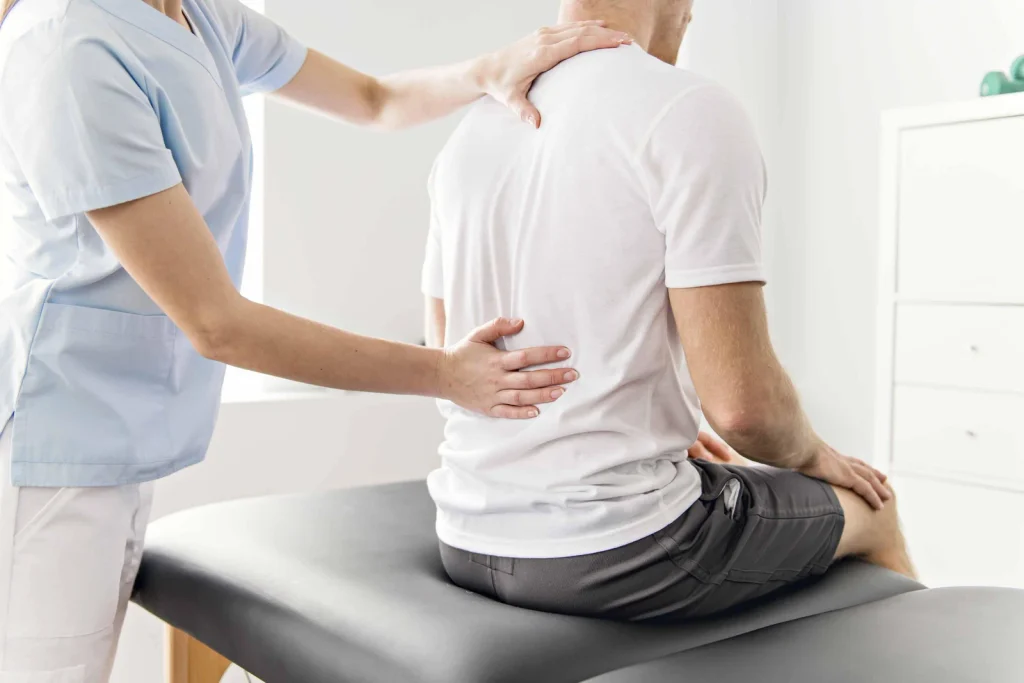
How Can Physical Therapy Help Back Pain?
Physical therapy is not simply about massage or putting heat on your back.
A modern rehabilitation program may involve several components.
Pain Management
Treatment may initially focus on helping you move more comfortably and understand what activities you can safely perform.
Restoring Movement
Restricted movement can make everyday activities difficult. Appropriate mobility exercises may help restore function.
Building Strength
Progressive strengthening can help you regain confidence and capacity for daily activities.
Improving Movement Habits
Your therapist may help you understand how you move, sit, lift, exercise, and perform other activities.
Returning to Normal Life
Ultimately, successful rehabilitation is about more than a lower pain score.
It is about getting back to the activities that matter to you.

Why Choose Prof. Dr. Hafiz Muhammad Asim?
Prof. Dr. Hafiz Muhammad Asim is a Consultant Physical Therapist with more than 27 years of experience in physical therapy and rehabilitation.
His qualifications include:
- Doctor of Physical Therapy (DPT), USA
- Orthopedic Clinical Specialist (OCS), USA
- PhD, Malaysia
His clinical areas include musculoskeletal and orthopedic conditions, chronic pain, neurological rehabilitation, and other rehabilitation needs.
The focus is on understanding the patient’s condition and creating an individualized approach to treatment and recovery.
Frequently Asked Questions About Back Pain in Lahore
Looking for Back Pain Treatment in Lahore?
If back pain is affecting your work, sleep, exercise, or everyday life, don’t ignore it or assume that surgery is your only option.
Start by understanding the problem.
A proper assessment can help you understand what may be contributing to your symptoms and what treatment options may be appropriate for you.
Physical Therapy and Recovery Services
We provide our clients with Physical Therapy and Recovery Services.
📞 Call: +92 300 9400346
✉️ Email: [email protected]
📍 Location: 153, 1, Sector F, Phase 5 D.H.A, Lahore, 54792, Pakistan
If you know someone struggling with back pain, share this article with them. It may help them understand when they should seek professional advice and what questions to ask about their treatment.